What movement teaches us about clarity
Most mornings I leave the house with my mind already three conversations ahead. Then, around twenty minutes in, things shift. On walking, designed environments and the spaces where thinking happens.
In the shadow of Hollywood’s art deco facades, I once committed an unthinkable cultural faux pas: I suggested we walk to lunch. My colleagues, brilliant artists from across the globe, exchanged anxious glances at the prospect of travelling a single block on foot. What seems fundamental in one culture can appear almost transgressive in another.
Our cities tell us where to go, how fast to move, which spaces belong to us and which merely tolerate our presence. Walking is an act of interpretation. We choose the route, set the pace, decide when to stop.
Most mornings I leave the house with my mind already three conversations ahead, rehearsing arguments I’ll never have, solving problems that don’t exist yet. The first ten minutes are the worst. I’m composing emails, running through project timelines, catastrophising about deadlines. Then around the twenty-minute mark, it shifts. I couldn’t tell you exactly when it happens. The racing thoughts don’t disappear. They just stop mattering quite so much. My pace settles. I notice things: the way light hits a particular building at this time of day, someone’s front garden that’s been completely redesigned since last week, the smell of bread from the bakery on the corner.
The Japanese have a name for something related: Shinrin-yoku, or forest bathing. What began as a government health initiative in the 1980s has become a recognised therapeutic practice, with research revealing measurable benefits to immune function, blood pressure and stress hormones. The practice involves slow, deliberate walking through woodland, engaging all the senses: the scent of pine resin, the texture of bark, the play of light through leaves. It’s less about exercise and more about presence. The forest becomes a space for the nervous system to recalibrate, for the constant vigilance of modern life to soften. British walkers have long intuited this without naming it: the pull towards parks, commons, the edges of cities where buildings give way to trees.
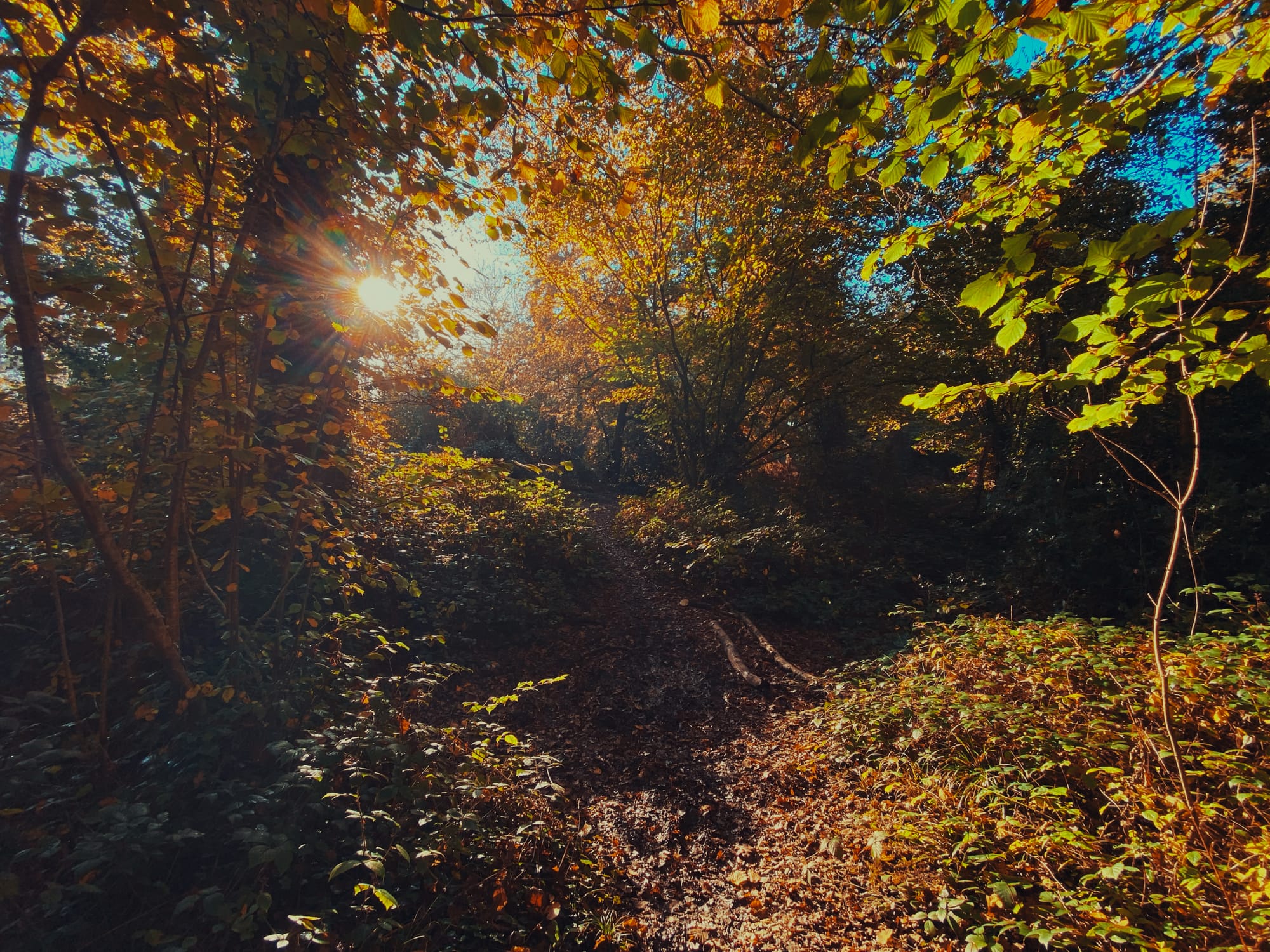
Britain has always been a walking culture, though we don’t always recognise it as such. From the Lake District poets to the Ramblers’ Association fights for access, there’s a thread running through our relationship with landscape that goes deeper than transport or exercise. The right to roam isn’t just legal principle, it’s cultural identity. And yet our cities are changing in ways that quietly reshape what walking means.
Walk from St Paul’s Cathedral towards the London Stock Exchange. You’ll cross Paternoster Square without realising you’ve left public land. The paving looks municipal. The benches invite sitting. There’s no fence, no gate, no sign announcing you’ve entered private property. The design creates a convincing illusion of public space, of civic territory where you might gather, protest, or simply exist as a citizen rather than a consumer.
This illusion holds until the moment you attempt to exercise those assumed rights. Take a photograph of the architecture. Organise a small gathering. Hold up a sign. Then the facade drops and security appears to remind you whose space this really is. I’ve watched this happen. The space that felt open and welcoming a moment ago suddenly reveals itself as something else: corporate territory with rules you never agreed to because you were never asked.
The same pattern repeats: Granary Square, Cardinal Place, More London, the new Medici Courtyard. Each designed to appear welcoming whilst retaining absolute control. These spaces are designed to be walked through, consumed visually, experienced passively. They’re not designed for the messy reality of actual public discourse.
Walking has even found its way into art practice. Hamish Fulton has spent decades working with a simple principle: “no walk, no work”. His journeys, often in remote landscapes across Britain and beyond, become the artwork itself. The walk is the thing. What you see in galleries are traces: wall texts describing distances and durations, images that serve as witnesses rather than representations.
Strip away outcome, focus purely on the act of moving through space and what remains? Fulton’s practice asks this question without trying too hard to answer it. The work exists somewhere between documentation and poetry, challenging what we think art can be.
Darwin had a thinking path at Down House, a gravel track he’d traverse daily while working through problems. The theory of evolution took shape on that loop. Scientists are now catching up with what people like Darwin already knew from experience: walking changes how we think. Research suggests the bilateral movement helps process trauma and regulate emotions. Maybe that explains the shift that happens twenty minutes into a walk, when the anxious mental rehearsals start to lose their grip.
Walking offers something increasingly rare: space to think without direction, to move without destination. Every regular walker knows the experience of returning to a familiar path and finding themselves caught by memories they’d forgotten they had. These routes become containers for thinking. The problem that seemed impossible at your desk looks different once your body is in motion. Sometimes the longest way round turns out to be the clearest way forward.
Next time you’re stuck on something, try walking. Clarity arrives when you stop trying to force it. The route matters less than the act of moving. Let your thoughts roam as freely as your feet.
Continue the journey
Right to Roam
Stone Club
Slow Ways
Forest bathing in Japan
Map of inaccessible scheduled monuments
Walks & Talks podcast
Footways in London